Home › Road, Street, and Municipal Paving
Partner with a reliable contractor for road paving in Colorado Springs, CO. We build and resurface streets, HOA roads, and municipal routes with proper base construction, compaction, and traffic control to deliver long lasting, smooth driving surfaces.
Precision Asphalt Colorado Springs provides professional road paving throughout Colorado Springs, CO, Colorado and the surrounding area. Our licensed, insured crew delivers safe, clean, on-time work with a free estimate before anything begins. Call (719) 722-2508 or request your free quote.
Road Paving for Colorado Springs Communities
Road, street, and municipal paving in Colorado Springs is not a one-size-fits-all job. Our roads see steep grades in the foothills, heavy snowmelt coming off Pikes Peak, and wide temperature swings that can break up weaker pavement. At Precision Asphalt Colorado Springs, we design each project around local conditions, whether it is a quiet neighborhood street near Powers Boulevard or a busier collector road serving schools and shopping centers.
When you contact us for road paving, we start with a site visit. We look at traffic patterns (cars, delivery trucks, school buses), existing pavement thickness, drainage paths, and nearby structures. We take note of curb and gutter conditions, utility covers, and ADA ramps at intersections so the finished roadway meets both city standards and real-world use. This hands-on evaluation helps us recommend the right asphalt mix, base preparation, and thickness instead of guessing from a satellite image.
Because municipal and public-facing work must meet specifications, we are familiar with Colorado Springs, El Paso County, and CDOT-related standards that apply to local streets, alleys, and minor arterials. We coordinate with your HOA board, property manager, or municipal engineer so that what we build today will pass inspections and hold up to years of front-range weather.
How Road and Street Paving Actually Works
Effective road paving in Colorado Springs is a sequence of tightly controlled steps. Skipping or rushing any of them is usually why roads fail early. Precision Asphalt Colorado Springs keeps each phase transparent so you know what is happening on your street and why.
First is evaluation and design. We determine whether full-depth reconstruction is required or if the existing base can be reused. Lightly damaged neighborhood streets may only need milling and overlay, while older roads with chronic cracking or rutting often require full-depth removal, subgrade repair, and a new aggregate base.
Next is traffic control planning. For residential streets and city blocks, we create a traffic plan that may include partial closures, detours, and phased work to keep residents, school buses, and emergency vehicles moving. We provide notice to affected property owners with clear dates and parking instructions so the project is inconvenient for as short a time as possible.
Then we move into surface removal and base work. For overlays, we use a milling machine to remove a controlled depth of old asphalt so new pavement can tie into driveways, curb heads, and intersections without creating trip edges. For full rebuilds, we remove all existing asphalt, then proof-roll and regrade the subgrade. Soft or pumping areas are excavated and replaced with compacted road base until compaction tests confirm stability.
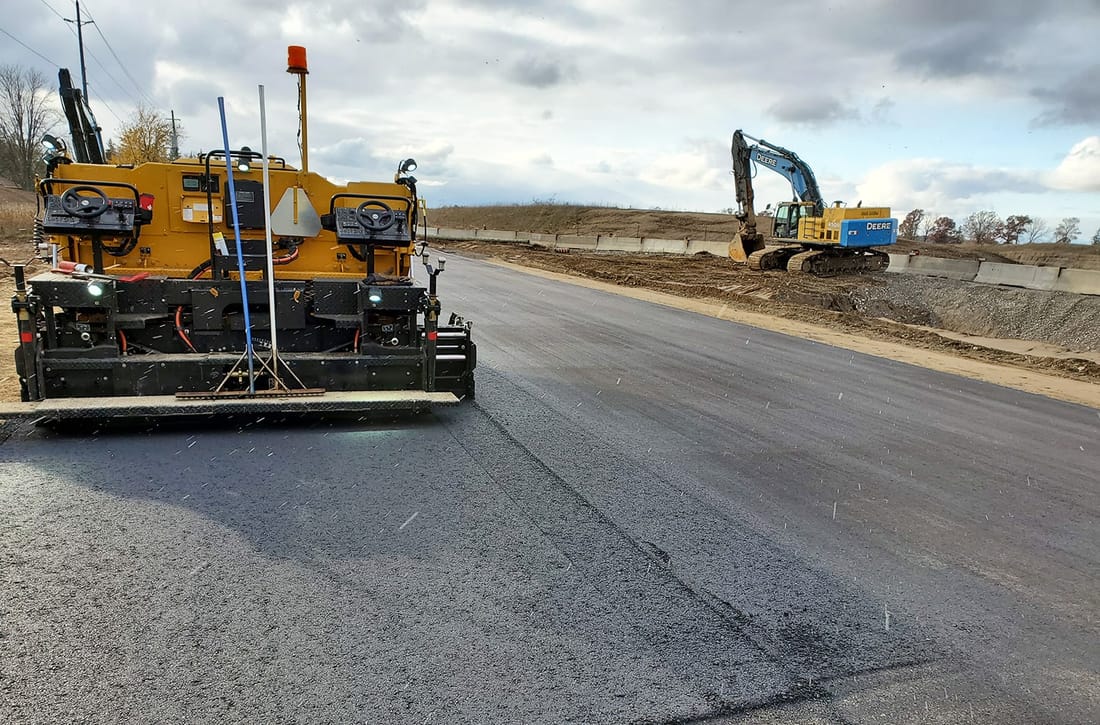
Once the base is shaped to proper crown and cross slope to shed water, we install asphalt in one or more lifts. Each lift is laid at a specific thickness, then compacted with steel drum and pneumatic rollers while the mix is still within the right temperature range. We pay special attention to longitudinal joints so adjacent passes bond tightly and do not become weak seams down the middle of your street.
Finally, we install transitions at driveways, adjust manhole and water valve covers to final grade, and apply temporary or permanent striping. We walk the project with the owner or inspector to confirm drainage, smoothness, and conformity to the agreed design.
Materials and Section Designs Built for Front-Range Conditions
Local climate and traffic dictate what kind of pavement you need. A short cul-de-sac off Dublin Boulevard that only sees residential vehicles can use a different section design than a commercial street serving warehouses near the airport. Precision Asphalt Colorado Springs explains your options in plain language so you can balance performance and budget.
For most local streets, we recommend a compacted aggregate base over prepared subgrade, topped by one or two asphalt lifts. A typical residential street might have 4 inches of hot mix asphalt over 6 inches of road base. A busier collector road could require 6 or more inches of asphalt or a thicker base layer. We match the design to anticipated ESALs (equivalent single axle loads), which is an engineering way of measuring how much truck traffic your road will see over its life.
We use mix designs suited to Colorado Springs elevations and temperature swings. This usually means a mix with the right balance of flexibility and stiffness so it can resist rutting in summer heat yet tolerate winter freeze-thaw cycles. On grades or intersections where vehicles brake and turn, we may specify a mix with higher stability to resist shoving.
If your project requires special features, we adapt the design. This can include reinforced pavement at dumpster pads, thicker edges where school drop-off queues form, or fabric interlayers to slow reflective cracking on older streets. For mountain-adjacent roads where deicing is heavy, we pay extra attention to drainage and edge support to protect against moisture damage and shoulder erosion.
What Drives the Cost of Road Paving in Colorado Springs
Understanding the real cost drivers helps you evaluate bids fairly and avoid change orders later. Precision Asphalt Colorado Springs provides itemized proposals so you can see what your road paving investment is funding.
Project size and mobilization are major factors. Shutting down lanes, bringing in a milling machine, rollers, and truck fleets, and setting up traffic control have fixed costs, whether the street is a few hundred feet or multiple blocks. Larger projects spread those fixed costs over more square yards, which is why per-yard pricing usually drops as projects grow.
Existing conditions matter a lot. Roads with good underlying base may only need a mill and overlay, which is far more economical than full reconstruction. However, if we discover widespread base failure (for example, deflection under truck tires, visible pumping of fines, or severe alligator cracking), we will recommend base repairs or replacement. Although this increases upfront cost, it prevents you from paying for an overlay that fails in just a few seasons.
Access and phasing also affect pricing. Narrow streets in older neighborhoods like those near downtown Colorado Springs can slow production because equipment and trucks must maneuver carefully and residents still need access to their homes. Night work or weekend-only schedules to accommodate businesses can also add cost, since crews must mobilize multiple times and work within shorter windows.
Other price components include asphalt thickness and mix type, required striping and signage, drainage improvements, and any necessary concrete work at curbs, gutters, and ADA ramps. We walk you through each line item so you can decide where to invest in longevity and where you may be able to save without compromising safety.
Common Road Problems Here and How We Fix Them
Colorado Springs roads see a specific set of problems tied to our freeze-thaw cycles, local soils, and traffic patterns. Precision Asphalt Colorado Springs addresses these issues at their cause, not just on the surface.
Alligator cracking and potholes often indicate base failure or moisture intrusion. For isolated spots, we cut out the failed area, repair or replace the base, and install new asphalt flush with surrounding pavement. If an entire block shows structural distress, we will likely recommend milling deeper or full-depth replacement with improved drainage to stop water from getting trapped under the pavement.
Rutting and shoving occur most often at stop signs, intersections, and downhill grades where vehicles brake and accelerate. These issues point to inadequate asphalt thickness, improper compaction, or a mix that is too soft for the load. Repair typically involves milling out the deformed asphalt and replacing it with a more stable mix, sometimes with added thickness.
Edge cracking is common on rural and semi-rural roads where there are no curbs and the shoulder is weak. We address this by cutting back the damaged edge, stabilizing or widening the shoulder with compacted base, and repaving the edge so it has better lateral support.
Drainage-related damage is a big concern here, especially after spring snowmelt or heavy summer storms. Standing water shortens pavement life dramatically. As part of any paving project, we check cross slopes, inlets, and gutter flow. When needed, we correct low spots during grading, add or adjust inlets, or reshape ditches so water moves off the roadway quickly instead of soaking into the base layer.
Working With Precision Asphalt Colorado Springs on Your Project
For HOAs, property managers, and municipalities, the process and communication are just as important as the finished pavement. Precision Asphalt Colorado Springs structures road paving projects so residents, tenants, and the public know what to expect each day.
Early in planning, we meet with your decision makers to discuss goals, any known problem areas, budget constraints, and scheduling limitations such as school calendars or special events. We can help you prioritize which streets, alleys, or parking lanes should be addressed first if your budget will phase work over multiple years.
Before construction starts, we provide notices and maps that clearly show closure dates, alternate parking areas, and approximate work hours. For multi-day or multi-phase projects, we assign a project lead who is available for on-site questions and updates. Residents are never left guessing when they can drive or park on a newly paved street.
During construction, we maintain safe work zones with signage, cones, and certified flaggers where required. Access for emergency vehicles is always kept open. We coordinate with trash and delivery services when possible so routine services can continue with minimal disruption.
After paving is complete, we walk the site, confirm drainage and smoothness, and address any punch-list items promptly. We also provide guidance on curing time, when heavy vehicles may return, and what routine maintenance will help protect your investment. If you would like, we can build a simple pavement management plan that outlines future crack sealing, sealcoating (where appropriate), and overlay timing so your new pavement reaches its full lifespan.