Home › Asphalt Pathways, Sidewalks, and Trails
Connect your property with smooth, accessible routes using asphalt pathway paving in Colorado Springs, CO. We build sidewalks, multi use trails, and bike paths with proper grades, widths, and transitions to serve pedestrians and cyclists safely.
Precision Asphalt Colorado Springs provides professional asphalt pathway paving throughout Colorado Springs, CO, Colorado and the surrounding area. Our licensed, insured crew delivers safe, clean, on-time work with a free estimate before anything begins. Call (719) 722-2508 or request your free quote.
Asphalt Pathways, Sidewalks, and Trails in Colorado Springs
Precision Asphalt Colorado Springs designs and builds asphalt pathways, sidewalks, and trails that fit how you actually use your outdoor spaces. Whether you are connecting a parking lot to a building entrance, adding a walking loop around a HOA greenbelt, or building a multi use trail in a park, we focus on comfort, durability, and year round safety.
Our crews work throughout Colorado Springs and surrounding communities, so we understand how freeze thaw cycles, sudden temperature swings, and occasional heavy runoff affect narrow asphalt surfaces. Path and sidewalk work is very different from paving a wide parking lot. The base is narrower, vehicle access is limited, and drainage details matter more because water tends to run along the edges. We take time to plan each project so your new asphalt walkway does not crack or heave after a couple of winters.
From the first visit, we look at how people will move through the space, where snow piles will go, where ice is likely to form, and how plows or maintenance vehicles will access the path. That practical planning is what makes our paths feel natural to walk or bike on, and it is how we help property managers and owners avoid surprise maintenance problems later.
Planning and Design: Width, Layout, and Drainage
Good asphalt pathway paving starts with a thoughtful layout. During our site visit, we walk the proposed route with you, flag obstacles, and talk through how the path will actually be used. A residential garden path may only need to be 3 to 4 feet wide, while a school or community trail often needs 6 to 10 feet to allow people to pass comfortably, strollers to maneuver, and maintenance equipment to get through.
In Colorado Springs, slopes and drainage are especially important. We design subtle cross slopes so water sheds off the path instead of pooling in the center or along one edge. Where the land dips or channels runoff, we may recommend French drains, swales, or a thicker base section to prevent the surface from softening and settling. Near building entrances or parking lots, we pay attention to how meltwater from snow piles will flow, and we adjust grades to reduce refreezing and black ice.
You can choose edge treatments that match your property. Some clients prefer clean saw cut edges that blend into turf, others select steel or concrete edging for a crisp line, and park or HOA projects may use compacted gravel shoulders so water drains away from the asphalt. We also discuss alignment details like gentle curves versus sharp turns, how to avoid tree root zones, and how to route paths around utilities to minimize future disruptions.
How Asphalt Pathway Paving Is Built Step by Step
Once the design is approved, Precision Asphalt Colorado Springs follows a clear process to build your asphalt pathway, sidewalk, or trail so it performs well in our local climate.
1. Site preparation and excavation. We strip sod or vegetation, remove organic topsoil, and excavate to the design depth. For most paths this is 6 to 12 inches below finished grade, depending on expected loading and soil conditions. In clay or poorly draining soils common in parts of Colorado Springs, we sometimes over excavate and replace weak material with compacted aggregate.
2. Base installation. We place a layer of crushed stone or road base (often 3/4 inch minus) and compact it in thin lifts using plate compactors or small rollers suited for narrow widths. Proper compaction is vital on pathways, because any soft spots show up later as dips or cracks. We check the base with levels and straightedges to ensure an even surface and correct slopes.
3. Edge control. Before paving, we set forms or guides to control the exact width and keep edges straight or smoothly curved. On some projects we install concrete ribbon curbs or mow strips first, then pave between them so the asphalt locks in place and resists edge raveling.
4. Asphalt placement. We use small pavers where access allows, or for tighter areas we hand place asphalt and compact it with walk behind rollers and plate compactors. Typical pathway thickness is 2 to 3 inches after compaction. For routes that occasionally carry maintenance vehicles, we may recommend an additional structural layer.
5. Compaction and finishing. We compact the surface in multiple passes to achieve a dense, even finish with no segregated stone or roller marks. Transitions to existing sidewalks, driveways, ramps, or trail segments are feathered so there are no trip edges.
6. Cleanup and curing. We clean up all loose material, rake disturbed areas, and can seed or re rock shoulders if requested. You can usually walk on the new surface within a few hours, but we recommend avoiding heavy equipment and plow blades for several days while the asphalt cools and hardens.
Material Options, Markings, and Accessibility Features
Even though all asphalt is black at first, you have several options to tailor your sidewalks and trails to their use and surroundings. For higher visibility in shaded areas or along busy parking lots, we can add reflective thermoplastic or painted striping, centerlines, and directional arrows. On multi use trails we often stripe dividing lines and mark crossing points to reduce conflicts between walkers, runners, and cyclists.
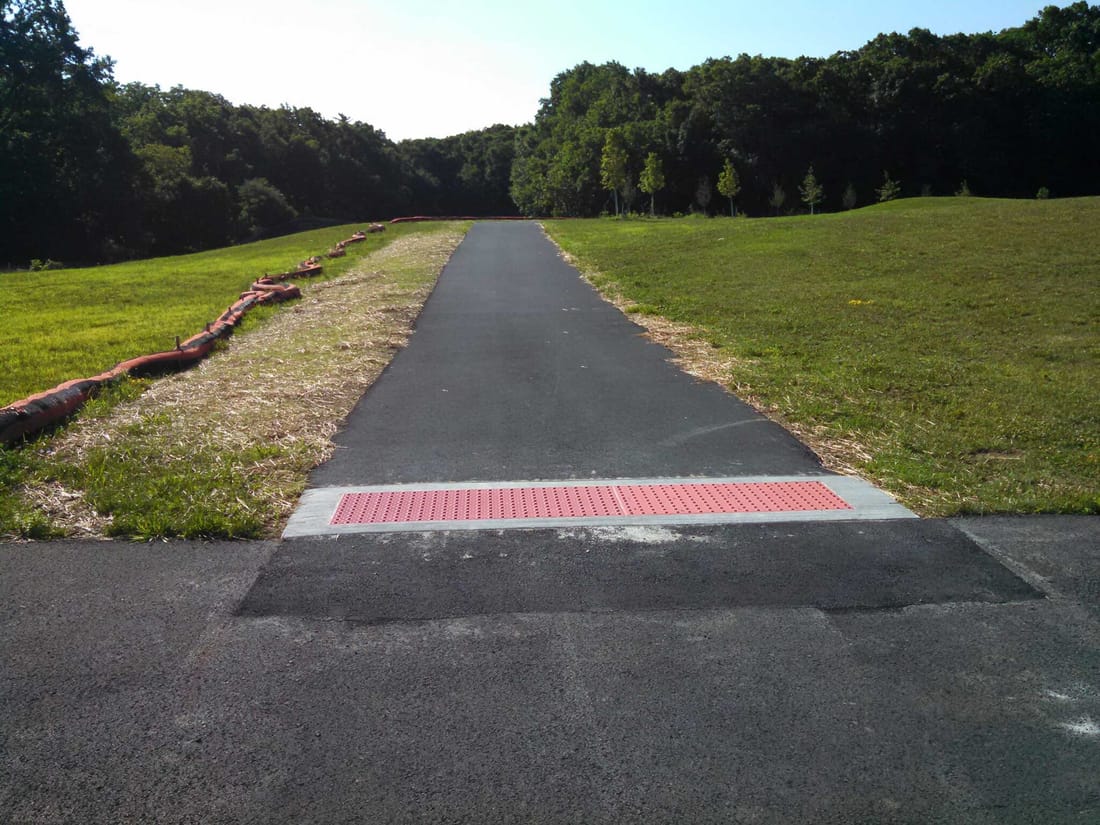
If you are connecting to public sidewalks or serving a school, church, medical office, or multifamily community, we incorporate ADA considerations. That includes smooth transitions at tie ins, appropriate running and cross slopes, and the right surface around curb ramps. Where asphalt pathways meet concrete sidewalks, we can install ADA compliant truncated dome panels in concrete so users have a consistent warning surface.
For clients who want a softer, more natural look on park trails, we may pair asphalt with compacted fines shoulders or use a slightly textured finish to improve traction. Although fully colored asphalt is uncommon and costly, we can coordinate color contrast using adjacent materials, such as pale decomposed granite or crusher fines next to a standard black asphalt path.
Lighting and signage planning is another part of the material conversation. While we do not install electrical systems ourselves, we coordinate path routing and base preparation so light pole bases, conduit, and signposts can be installed cleanly without tearing up new pavement.
Cost, Lifespan, and Common Issues in Colorado Springs
Most pathway, sidewalk, and trail projects are priced by the square foot, but several local factors influence your final cost. Access is a big one: if crews and equipment can reach the work area easily, costs stay lower. Projects behind buildings, inside courtyards, or in steep terrain may require more hand work, which takes extra time. The depth of excavation and base, pathway width, total length, and need for drainage structures also affect price.
In the Colorado Springs area, a well built asphalt path on solid base usually lasts 15 to 25 years with routine care. Common issues we see include edge cracking where turf or landscaping crowds the pavement, reflective cracking from underlying movement, and heaving near shallow utilities or poorly compacted trenches. We also see surface wear in spots where plow blades scrape aggressively or where ice melt chemicals pool repeatedly.
Precision Asphalt Colorado Springs addresses these issues by building a strong base, controlling water, and paying attention to edges. We recommend simple maintenance, such as keeping vegetation trimmed back, directing sprinklers away from the path, cleaning sediment where runoff deposits it, and sealing larger cracks before water can penetrate and freeze. If you call us early, many small problems can be fixed with localized patching or overlays instead of full replacement.
When comparing quotes, ask each contractor about base depth, compaction equipment, drainage planning, and how they will handle access and cleanup. A cheaper price that leaves out base material or drainage details often leads to earlier failures, especially with our freeze thaw conditions and occasional heavy summer downpours.
What to Expect When You Work With Precision Asphalt Colorado Springs
Our goal is to make adding or replacing asphalt pathways, sidewalks, and trails straightforward for you. We start with a site meeting where we listen to your needs, measure, and look at grades, soil, and how people currently move through the area. Within a few days, we provide a clear written proposal that explains the scope, materials, thicknesses, and any drainage or access challenges.
Before work starts, we coordinate schedules around your operations, school hours, tenant needs, or public access. For busy properties, we can phase the work so there is always at least one safe route open, and we set up temporary signage and barriers so people know where to walk. Our crews arrive with the right sized equipment for narrow pathways and tight spaces, and a foreman is on site to answer questions and walk you through progress.
After paving, we perform a final walkthrough with you to check slopes, tie ins, and finish quality. We explain how long to keep traffic off the surface, when you can plow or use maintenance carts, and what early maintenance steps will help the pathway last longer. If small issues appear as the asphalt settles during the first season, we stand behind our work and address them promptly.
Because we live and work in Colorado Springs, we design each pathway project with local weather, local soils, and local use patterns in mind. Whether you manage a commercial property, run an HOA, or own a single home, Precision Asphalt Colorado Springs is ready to help you build safe, durable, and attractive asphalt paths that make your property easier and more pleasant to navigate.