Home › Industrial and Heavy-Duty Asphalt Paving
Handle heavy loads and constant traffic with industrial asphalt paving in Colorado Springs, CO. We design and build reinforced asphalt surfaces for truck yards, loading docks, and service drives with the right thickness and base to resist rutting and failure.
Precision Asphalt Colorado Springs provides professional industrial asphalt paving throughout Colorado Springs, CO, Colorado and the surrounding area. Our licensed, insured crew delivers safe, clean, on-time work with a free estimate before anything begins. Call (719) 722-2508 or request your free quote.
Industrial Asphalt Paving Built for Colorado Springs Conditions
Precision Asphalt Colorado Springs specializes in industrial asphalt paving that holds up to real abuse: heavy truck traffic, forklifts, loaders, fuel spills, and freeze-thaw cycles at 6,000+ feet elevation. Our projects range from distribution centers near the Colorado Springs Airport and manufacturing plants along Powers Boulevard to utility yards and municipal facilities across El Paso County.
Industrial and heavy-duty asphalt is not just a thicker version of a parking lot. Mix design, base structure, joint layout, and drainage all change once you start dealing with consistent 80,000 lb trucks, stacked pallets, container storage, or tracked equipment. We engineer every pavement section for the actual loading and site conditions, not a one-size-fits-all spec.
Whether you are expanding a warehouse, rebuilding a loading dock apron that has been failing for years, or converting gravel yard space to hard surface, our team evaluates soil conditions, traffic patterns, existing utilities, and snow management needs before we design the section. The result is an industrial pavement that performs longer and costs less to own over its life cycle.
Site Evaluation and Design for Heavy Loads
A successful industrial asphalt paving project starts with understanding what the pavement must carry. Precision Asphalt Colorado Springs begins with a site walk and data gathering, usually including:
• Inventory of vehicle types and weights (semi trailers, yard trucks, forklifts, emergency vehicles).
• Expected daily traffic counts and wheel paths (where vehicles actually turn, queue, and load).
• Subgrade conditions and drainage paths on your property.
In many Colorado Springs industrial areas, especially along Nevada Avenue and older warehouse districts, we find variable native soils, from decomposed granite to expansive clay pockets. Where needed, we perform proof rolling or arrange soils testing to see how the subgrade responds to heavy loads.
Based on this information, we design a pavement section that may include geotextile fabric, geo-grid reinforcement, thicker aggregate base course (ABC), and multiple lifts of higher-stability asphalt. For docks and trash enclosures that see point loading and turning in tight spaces, we often recommend thicker asphalt or a transition to concrete in the highest-stress area, with properly tied-in industrial asphalt around it.
What Makes Industrial Asphalt Mixes Different
Industrial asphalt paving uses different material designs than a standard commercial parking lot. Precision Asphalt Colorado Springs works with local plants to specify mixes that match heavy-duty performance requirements and CDOT or municipal standards where applicable.
We typically specify a denser, higher-stability aggregate gradation with a well-bonded skeleton of crushed rock, not rounded gravel. This allows the mix to resist shoving and rutting under slow, heavy truck tires, especially in loading zones or at facility entrances near stop signs.
Binder selection matters in Colorado Springs because of winter lows, summer heat, and strong UV. We use performance-graded binders that can flex during freeze-thaw cycles without cracking prematurely. In fuel or chemical exposure areas, such as near tanks or fleets that idle in place, we may recommend surface treatments or alternate materials for specific zones because standard asphalt softens with long-term hydrocarbon exposure.
We also pay attention to lift thickness. For industrial work, asphalt is rarely placed in a single thin layer. Multiple lifts in the 2.5 to 3 inch range compact better and reduce internal voids. This helps the pavement resist moisture infiltration and extends life under heavy repetitive loading.
Construction Process: From Subgrade to Final Roll
Every industrial asphalt paving project follows a disciplined sequence so the pavement can carry heavy loads from day one. Precision Asphalt Colorado Springs typically structures work in these phases.
1. Demolition and excavation: We remove existing asphalt, concrete, or gravel and excavate to the design depth. On older Colorado Springs industrial sites, we often find poor fill materials that need to be removed and replaced with quality base.
2. Subgrade preparation: The native soil is shaped to the design grade, moisture conditioned as needed, and compacted to specified density. Soft spots are undercut and rebuilt so they do not turn into future ruts or depressions.
3. Base installation: We import and place aggregate base course in layers, compacting each lift thoroughly. For heavy-duty pavements, base thickness is commonly in the 6 to 12 inch range, and we may add geo-grid if soil support is marginal.
4. Fine grading and proof rolling: The prepared base is graded to achieve proper drainage and then proof rolled with a loaded truck or heavy roller. Any deflection or pumping is corrected before paving proceeds.
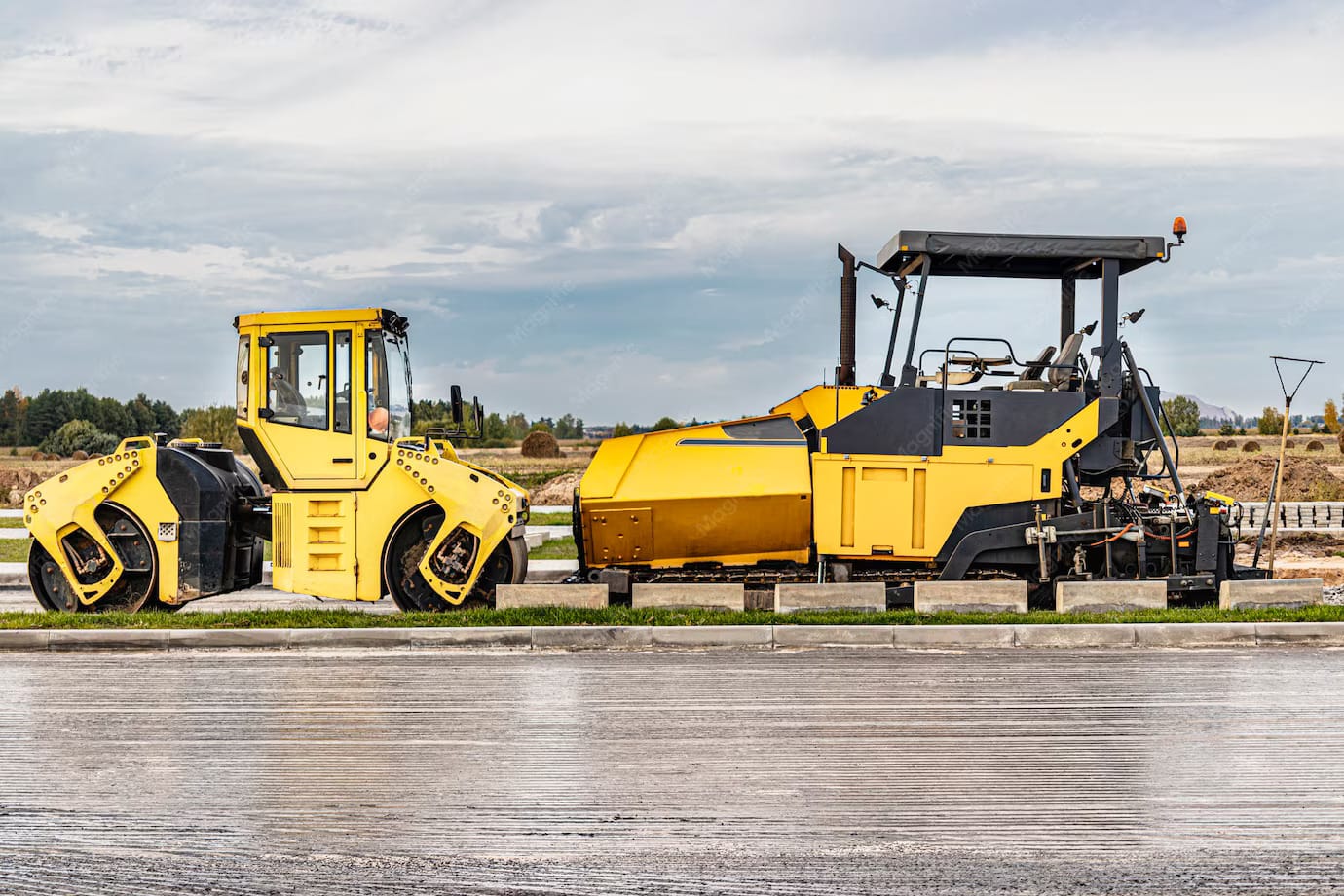
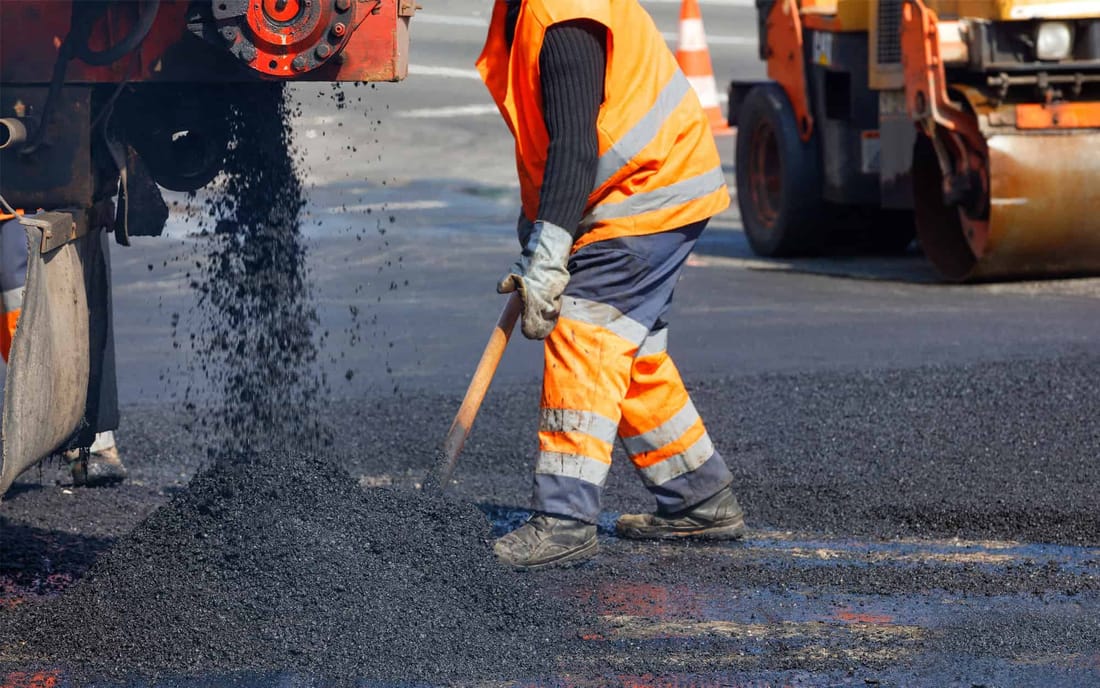
5. Asphalt paving in lifts: Hot mix asphalt is delivered from local plants, placed with a paver in controlled passes, and compacted with vibratory and static rollers. Joints are staggered and kept out of primary wheel paths whenever possible.
6. Detailing and striping: After cooling and initial cure, we add striping, signage, wheel stops, and concrete protections where specified. For distribution facilities, we coordinate markings for trailer positions, fire lanes, and pedestrian routes so operations run smoothly from the first day.
Managing Common Industrial Pavement Problems
Heavy-duty pavements in Colorado Springs face recurring issues that we plan for up front. Precision Asphalt Colorado Springs designs and builds with these failure modes in mind so you do not face expensive early reconstruction.
Rutting and shoving often occur where trucks brake, turn, and idle, such as at dock doors or tight turns around buildings. We minimize this by increasing asphalt thickness, using stiffer mixes in those specific areas, and expanding turning radii where possible.
Cracking from freeze-thaw cycles and subgrade movement is another concern, particularly on sites built over older fill in eastern Colorado Springs. We combat this with better base preparation, attention to drainage, positive surface slopes, and saw-cut joints around utilities or transitions to existing pavements.
Ponding water is a silent killer of industrial asphalt. Water that stands in wheel paths accelerates stripping and potholes. Our crews set grades for positive drainage to inlets or outfalls, verify slopes with laser equipment, and adjust on site if field conditions differ from plans.
Where operations demand snow plowing, such as along North Academy or near the Air Force Academy support facilities, we consider plow routes while designing curb lines and joint locations. Clean plow paths without abrupt edges or misaligned joints reduce damage every winter.
Cost Drivers and Planning for Future Expansion
Industrial asphalt paving has different cost drivers than light-duty work. Understanding them helps you budget accurately and compare bids fairly. Precision Asphalt Colorado Springs is transparent about what affects your price and what is optional.
Key cost components include excavation depth, base thickness, asphalt tonnage, and any soil stabilization or geo-grid reinforcement. If your site has poor soils or needs undercutting, we explain the implications and offer options such as partial stabilization in the worst zones instead of blanket treatment.
Access and phasing also impact cost. For active facilities along I-25 or in congested industrial parks, we often stage work so truck traffic and shipping can continue. Night or weekend work, temporary access lanes, and coordination with your logistics schedule can add to project complexity, but usually save you money by reducing operational downtime.
We also look at future expansion. If you anticipate adding bays, extending storage yards, or increasing truck volume, we can design edge details that make future tie-in easier. This may mean leaving a straight, well-compacted edge, planning utility locations with pavement growth in mind, or oversizing certain drainage elements now so they do not need to be reconstructed later.
Why Industrial Clients Choose Precision Asphalt Colorado Springs
Industrial, manufacturing, and logistics facilities around Colorado Springs choose Precision Asphalt Colorado Springs because we treat paving as part of your operation, not just a construction item. We coordinate with plant managers, safety teams, and GC superintendents so your yard, dock, or access roads support how you actually work.
Our crews are accustomed to working around live operations, from cold storage facilities that cannot shut down, to public utility yards with strict security protocols. We build realistic schedules, communicate clearly about closures and cure times, and sequence areas to keep critical access open when possible.
If you are planning new construction, reclaiming a failing truck yard, or upgrading from gravel to hard surface, we can provide budget pricing early and refine it as plans develop. When the project moves forward, you get a fully engineered pavement section tailored to your loading, soil conditions, and Colorado Springs climate.
Contact Precision Asphalt Colorado Springs to schedule an on-site evaluation of your industrial or heavy-duty asphalt paving needs and get a proposal that is grounded in real usage, not assumptions.